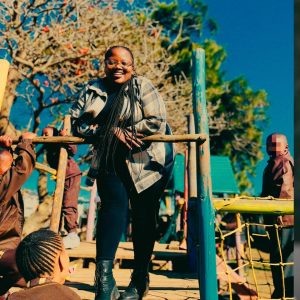
The other day, I found myself on a jungle gym with a group of children.
Somewhere between climbing, laughing, and pretending, I caught myself smiling.
Not because I was “joining in” as the teacher, but because, for a moment, I felt like I was meeting a younger version of myself.
I was the girl who climbed trees higher than she probably should have. I rode my bicycle for hours, played in the mud, built imaginary worlds, came home covered in scratches, and occasionally, with a broken bone to prove I’d fully committed to the adventure.
I was energetic. Curious. Silly. A little mischievous.
I didn’t realise it then, but play was never just something I did. It was how I experienced the world.
As adults, many of us slowly pack parts of ourselves away. We become more aware of expectations, more conscious of how we appear, and more careful about taking up space.
Somewhere along the way, climbing trees becomes “childish,” getting dirty becomes inconvenient, and being unapologetically ourselves becomes something we quietly outgrow.
Or at least, we think we do.
Then something interesting happens.
The older we get, the less we worry about what other people think. We begin to settle into who we are. We rediscover parts of ourselves we thought we’d left behind.
That energetic little girl still exists in me.
She just now climbs jungle gyms instead of trees.
That moment of play made me think about something else: learning.
For a long time, I believed there was a “right” way to learn. I assumed that if I just tried harder to study like everyone else seemed to, everything would eventually click.
But it never really did.
It wasn’t until I returned to university to complete my teaching degree—my second degree—that I stopped trying to fit my brain into someone else’s way of learning.
Instead, I started paying attention to my own.
I realised I needed to hear information more than once, so I recorded lectures and listened to them repeatedly. I needed time to think before ideas made sense. I read the prescribed texts, then transformed them into colourful posters and mind maps that helped me see patterns instead of pages of information.
For the first time, I wasn’t fighting the way my brain worked. I was working with it.
Ironically, it was also the first time I received an academic award.
Not because I had suddenly become “smarter”, but because I had finally stopped trying to learn like everyone else. That experience shaped the way I see children.
I often wonder how many learners spend their school years believing they aren’t capable, when really, no one has taken the time to understand how they learn best.
Some children think while they move.
Some need to talk their ideas out loud.
Some need colour, rhythm, repetition, or hands-on experiences.
Some need quiet.
Some need time.
And many need permission to learn differently.
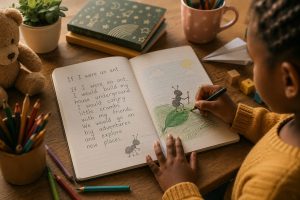
Every child deserves the freedom—with guidance, support, and healthy boundaries—to discover who they are. Spaces where they understand that play is not a reward after learning; it is one of the ways learning happens. Where children experiment, solve problems, build confidence, develop relationships, and express parts of themselves that words cannot always capture.
One of the greatest gifts we can give a child is our attention. Watch them when no one is directing the activity. Watch what they choose to do when screens are switched off.
Do they build? Climb? Draw? Collect? Pretend? Ask questions? Organise? Create? Move? Observe?
Play is rarely random. It tells a story.
It offers clues about how a child thinks, what captures their attention, how they solve problems, and how they naturally engage with the world.
Those same clues might just tell us how they learn best.
Perhaps our role as adults is not to shape children into the learners we expect them to be.
Perhaps it is to become careful observers—to notice, nurture, and celebrate the learner they already are.
Looking back, I don’t think the little girl climbing trees was ever “too much.”
She was simply learning in the way that made the most sense to her.
And maybe that’s the lesson she was trying to teach me all along.