

The world our children are growing in, is increasingly being shaped by technology. Schools have the important role of preparing learners to become curious and critical thinkers, problem-solvers and creators who engage confidently and responsibly with technology.
As exciting as this shift may be, I cannot help but wonder: Are South African classrooms ready for the tech leap?
We are not all starting from the same place.
Having spent a couple of years in the classroom, one thing became quite clear to me: there is no single South African classroom experience.
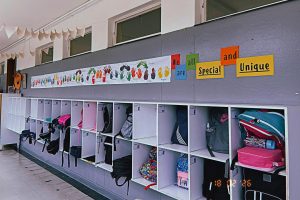
The realities of our schools differ drastically. What may be seen as a norm or standard in a suburban classroom in Johannesburg, may look completely different to a classroom in the Eastern Cape.
Never mind that – a lot of schools within the same province, district, or even circuit, have differing realities when it comes to access to teaching material, resources and technology.
In one classroom in KuGompo City, Grade 4 learners are expected to have Chromebooks or iPads, due to the advancement in the presentation of the curriculum at the school.
Across the Biko Bridge, the very same curriculum is being taught to Grade 4 learners who only have access to textbooks, while the teachers battle with daily access to printing and WiFi, let alone data projectors and interactive whiteboards.
– Same age, same grade, same curriculum, and yet their opportunities to access and further their knowledge of the curriculum is completely different.
Can we leap forward , when we are presently struggling with the foundations?
We cannot run away from the tension that conversations like this bring – How are we trying to make strides towards the future, when our children are currently battling with reading for meaning in the present?
In February, 2025 The Department of Education responded to question posed in Parliament (National Assembly) and said that Coding and Robotics cannot, for the foreseeable future, be rolled out as a compulsory subject for all learners.
Although the main reasoning behind this was the cost of teacher development, infrastructure and equipment, one could easily argue that all funds and resources need to first be channeled towards improving literacy and numeracy skills within the Foundation Phase first.
“If learners are unable to read for meaning and count by the time they reach Grade 4, they will face significant barriers when taking Science, Technology, Engineering and Mathematics-related subjects, including Coding and Robotics. It is therefore important that the limited resources available to our schooling system are first focused on improving learning outcomes in the Foundation Phase before we can expand the roll-out of Coding and Robotics as a subject.”
(NATIONAL ASSEMBLY WRITTEN REPLY QUESTION 32. DATE OF PUBLICATION OF INTERNAL QUESTION PAPER: 06/02/2025 INTERNAL QUESTION PAPER: 01/2025)
Are we preparing and supporting teachers for the ever-changing classroom?
Policy reaches the child, through the teacher.
The teacher who is expected to plan for and deliver the curriculum, develop and implement Individual Support Plans, meet with parents to discuss learner progress, pull their weight as part of the school’s events committee, somehow fit in two or more hours of Netball every week, mark books, complete assessments and write individual report comments for all 32 of the learners in the class, while ALSO having to carry the responsibilities and realities of their own personal lives.
I am pretty sure teachers are tired of hearing the words, “You signed up for this career, deal with it.“
The truth of the matter is that education, and the children that we teach, are constantly changing. The expectations and challenges facing teachers today extend far beyond standing in front of a classroom and teaching a lesson.
Although our understanding of neurodiversity continues to grow, teachers are increasingly being called to adapt their practice to meet the diverse learning, sensory, communication, attention and regulation needs of the children in their classrooms.
This is an area in which teachers still need meaningful opportunities for professional growth, practical guidance and ongoing support, so that they are equipped to show up as best they can for the most important people in the education system — the children.
This need for continued growth and support does not end with our increasing understanding of children and their diverse needs – The world they are growing up in is changing too.
As technology continues to advance, so too will the knowledge, skills and approaches required of the teachers supporting them. If Coding, Robotics and Artificial Intelligence are to become meaningful parts of children’s learning, investment in technology must be accompanied by equal investment in the people expected to bring it into the classroom.
We cannot continue advancing what we expect from education without advancing the support we provide to teachers.
Technological advancement and Artificial Intelligence have the potential to open exciting new possibilities for South African children. There is no question that they deserve opportunities to participate meaningfully in an increasingly technological world.
Moving forward requires us to be honest about where we are starting from. Our schools do not have equal access to resources, many of our children are still struggling with foundational skills and our teachers continue to carry growing expectations, without always receiving the support needed, to meet them.
Perhaps then, readiness is not about asking whether South Africa should make the technological leap or not, but rather about asking how we take the leap, without leaving schools, learners and teachers behind. Our intentions should, in my opinion, be centred around creating conditions for everyone to be adequately prepared.
The future of education may be technological,
but it still begins with people.